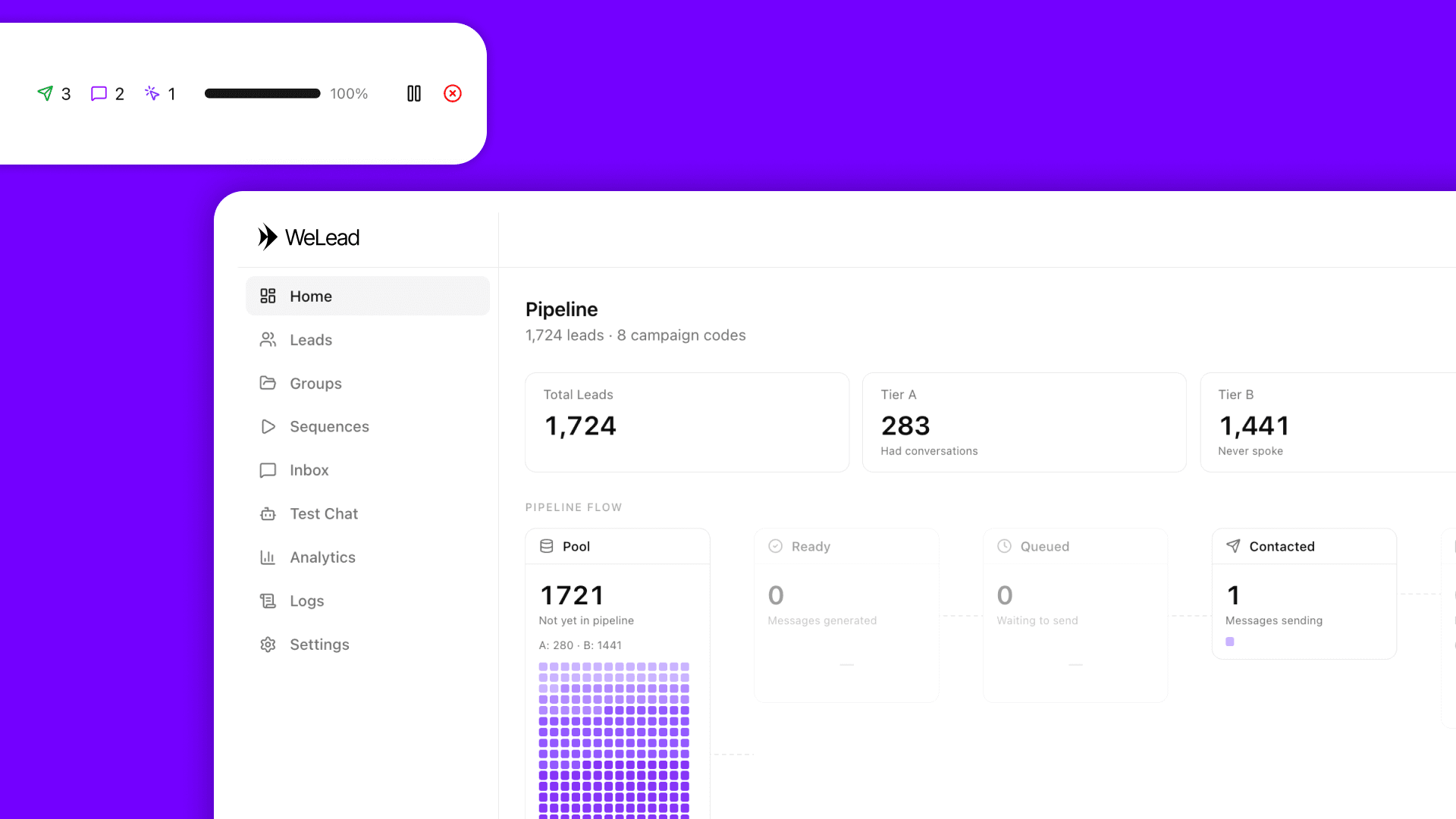

An agent changes a customer's appointment. The customer says they never asked for it. Your team opens the chat transcript, but the instruction came from a CRM note, the calendar write happened through a tool, and the confirmation message was sent by a different service. Nobody can reconstruct the decision.
That is why an AI agent audit trail should be part of the product from the start. It is the record that connects an instruction to the information the agent used, the authority it had, the action it took, and the result. Without that chain, an autonomous workflow may be fast, but the business cannot reliably correct it or explain it.
What is an AI agent audit trail?
An AI agent audit trail is a chronological, queryable record of consequential decisions and actions in an agent workflow. It links each action to its trigger, the acting identity, the source material, any approval, the tool call, and the resulting change. Its purpose is to answer a practical question: what happened here, and who or what authorised it?
A normal application log may say that a calendar API returned 200 OK. A trace may show that the agent called the calendar tool after reading a message. An audit trail needs the business meaning as well: which appointment changed, which rule permitted the change, whether the patient was verified, and whether a human approved it. These records can share infrastructure, but they serve different readers.
This is a natural extension of the engineering needed to run AI in production. Monitoring tells you that a workflow is behaving strangely. An audit trail lets you investigate one decision and put it right.
Why do chat transcripts fall short?
An agent's work rarely lives in one conversation. It reads a document, searches a database, calls a model, hands off to another service, and writes into a business system. A transcript captures only part of that chain. It also cannot prove that a message was actually sent or a record was actually changed.
Take a lead reactivation system. An agent may decide that a reply is interested, check the lead's history, suggest a call, update a CRM stage, and ask a salesperson to take over. If the salesperson later asks why the record was marked qualified, the useful answer is not the entire prompt history. It is the exact inbound reply, the criteria used at the time, the decision, and the CRM update that followed.
The same applies when an agent has permission to act in email, finance, support, or operations. The more systems it can reach, the easier it becomes to lose the thread between intention and effect. OWASP's guidance on excessive agency calls for constrained permissions and downstream authorisation, with logging and monitoring to detect undesirable actions. A log cannot make an over-permissioned agent safe. It can tell you what happened while you fix the permission boundary.
What should the record contain?
For each consequential action, a useful minimum is:
- Trigger and scope. The user request or event that started the run, the workspace or customer it belongs to, and the task the agent was allowed to perform.
- Identity and authority. The agent or human identity, its permissions at that moment, the policy or rule that allowed the action, and any human approval.
- Evidence. References to the source records the agent used, with versions or timestamps where possible. Keep the link to the source, not just a sentence the model wrote about it.
- Decision. What the agent proposed, the confidence or validation result if relevant, and why it escalated or proceeded.
- Execution and outcome. The tool and target system, a safe record of the request, the returned status, the object that changed, and whether a later correction reversed it.
Give the whole run an identifier that follows it across services. Within that run, each important read, approval, and write should have its own event. OpenAI's Agents SDK tracing documentation illustrates the technical side: generations, tool calls, handoffs, and guardrails can be captured as spans in one workflow trace. Add your application's business identifiers and approvals to make that trace useful to an operator, not just a developer.
This structure pays off when a workflow spans hours or days. A booking request may arrive on Monday, receive a human approval on Tuesday, and trigger an outbound confirmation on Wednesday. The record should link all three without pretending they happened in one chat session.
How much should you log?
Enough to reconstruct the action, but no more sensitive content than the task requires. Recording every raw prompt, medical note, or customer message in a permanent telemetry store can create a second, poorly governed copy of the business's private data.
Prefer source identifiers, hashes, event types, and small redacted excerpts where those are sufficient. Restrict access to full content, set retention periods, and record who viewed the trail. Keep security logs protected against casual editing. If the source record can change, capture its version or an immutable reference so a later reviewer is not shown new content as if it were the content the agent saw.
The question is not 'can we log everything?' It is 'what evidence will we need to explain or reverse this action?' NIST's AI Risk Management Framework treats documentation, monitoring, and accountability as ongoing parts of managing AI systems. It does not prescribe one universal event schema; the right record depends on the workflow and its risks.
When should a human approval be part of the trail?
Approval belongs at the point where a mistake becomes costly or hard to undo. A draft reply can be reviewed later. Sending it to a customer is a different event. Suggesting a refund is one thing; issuing it is another. The audit trail should show both the proposal and the authorisation for the final write.
Use explicit gates for actions such as changing financial records, deleting data, sending sensitive information, or making commitments to a customer. The gate should sit in the service that executes the action, where identity and permission can be checked. A prompt saying 'ask before doing anything important' is helpful guidance, but it is not an access-control system.
Where low-risk actions run automatically, set limits: which records may be touched, how many actions may occur in a period, and what happens when evidence is missing. Escalation is a valid outcome. It is better for an agent to leave one ambiguous case for a person than to produce a neat but untraceable mistake.
How do you start without building a compliance project?
Choose one workflow that already has permission to write into another system. Draw its path from trigger to final change. At each step, ask what a support or operations colleague would need to know if a customer challenged the outcome tomorrow. Store that information as structured events, then test the trail by investigating a real or simulated mistake.
You should be able to answer five questions in minutes: What initiated this run? What did the agent read? Why was the action allowed? What changed? How can we correct it? If any answer requires searching three dashboards and guessing which entries belong together, the record is incomplete.
An audit trail is not a substitute for good permissions, tests, or measuring whether the agent delivers value. It makes all three more useful. Teams can see recurring failure patterns, tighten a policy, and verify that a fix changed the outcomes that matter.
The first time an agent does something surprising, the business will ask for an explanation. Build the answer into the system before that day arrives.